This 12-week module introduces students to the core principles of electrical and electronic engineering through an interactive, hands-on approach. The course builds foundational knowledge in electricity, circuit theory, digital logic, electrical machines, and instrumentation, preparing learners for advanced technical studies and practical applications.
The module follows a Triangle of Learning model, integrating:
-
📘 Structured Web Lessons – Concise, accessible explanations and worked examples
-
🎥 Video Tutorials – Engaging demonstrations of key concepts using real hardware and simulations
-
❓ Interactive Quizzes – Weekly knowledge checks and formative assessments
- Teacher: System Administrator
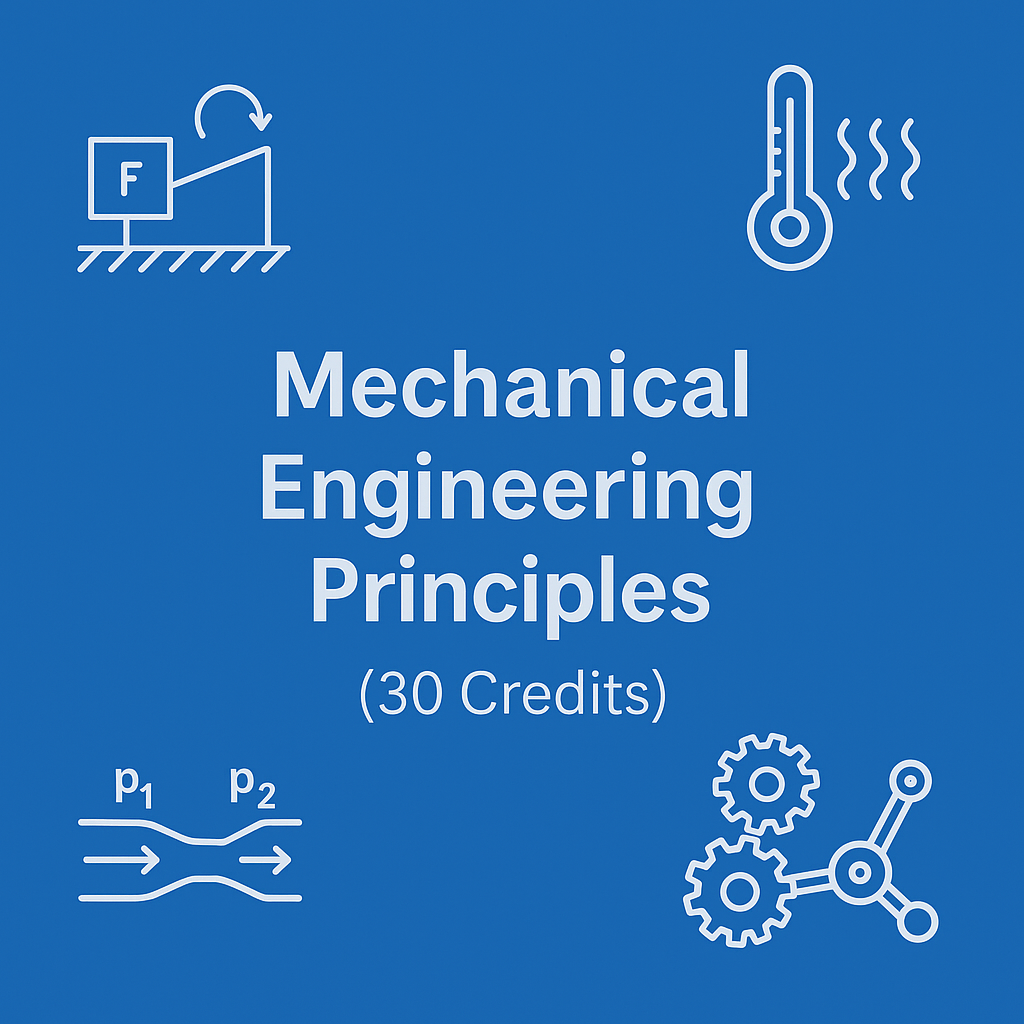
This course provides first-year engineering students with a solid foundation in mechanical systems through a practical, simulation-based learning model.
Using the Triangle of Learning method—interactive web content, YouTube video demonstrations, and self-marking quizzes—students will explore core engineering concepts:
-
Mechanics and force systems
-
Thermodynamics and heat transfer
-
Fluid properties and flow behaviour
-
Mechanical systems like gears and linkages
The course is project-based, culminating in the design and simulation of a robot buggy using Fusion 360.
💡 Ideal for students entering mechanical, automotive, or mechatronic engineering pathways.
- Teacher: System Administrator
Engineering Design Principles (Year 1 – 30 Credits)
This 12-week online course introduces the fundamentals of engineering design tailored for first-year Electrical and Electronics Engineering students.
🌐 Web-based lessons
🎥 Weekly video tutorials
❓ Interactive multiple-choice quizzesTopics include: design process, CAD, materials selection, sketching, prototyping, and testing. The course applies the Triangle of Learning model, ensuring deep understanding through theory, visual demonstration, and assessment.
💡 Real-world design case studies
🛠️ Hands-on practice with CAD and sketching
📊 Weekly feedback and progress trackingBy the end of the course, students will confidently interpret design problems, communicate solutions using technical drawing, and create working prototypes.
- Teacher: System Administrator
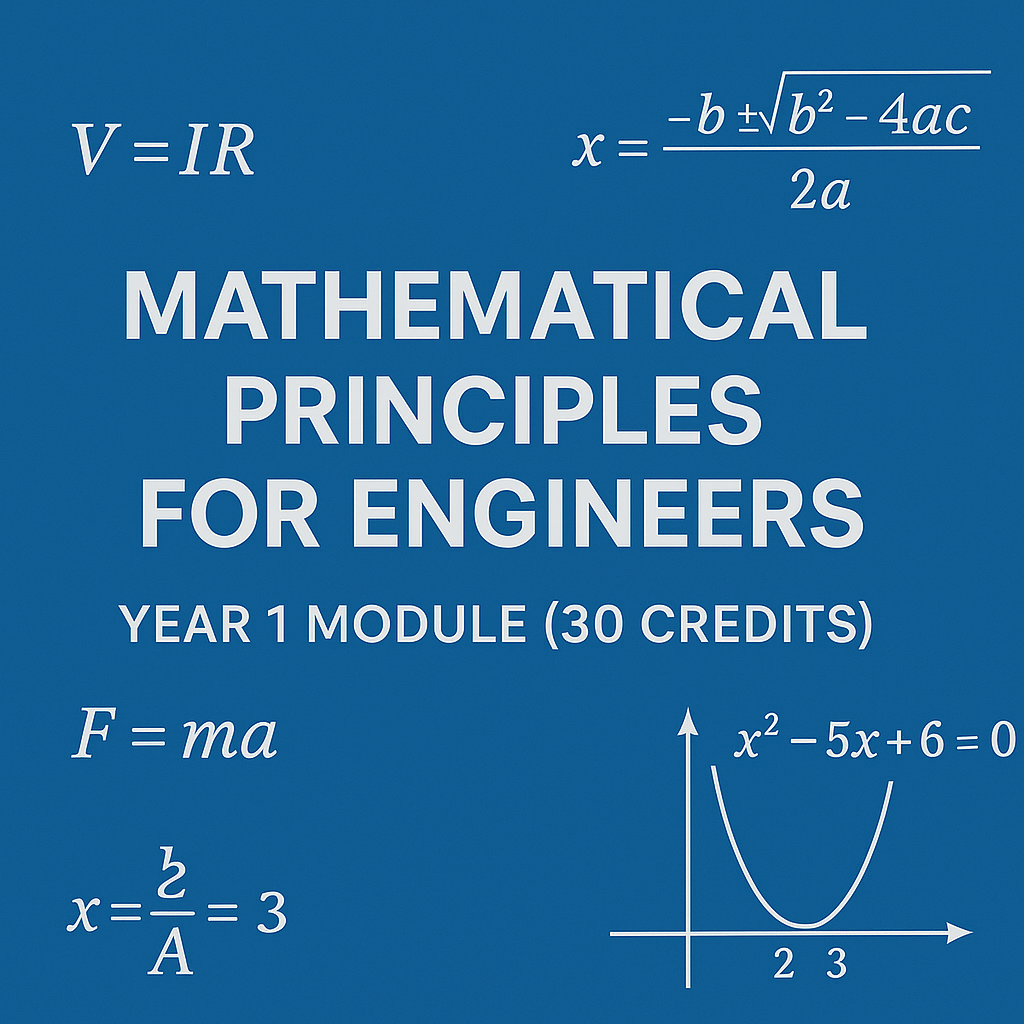
This module lays the mathematical foundation essential for solving engineering problems. It covers algebra, functions, trigonometry, calculus, and introductory differential equations—all within an engineering context.
You will learn to simplify expressions, solve equations, analyse functions graphically, and apply mathematical techniques to real-world systems including circuits, forces, and motion.
This course also introduces the use of technology and simulation tools to enhance mathematical modelling and problem-solving.
📌 Topics Include:
-
Algebraic manipulation and engineering formulas
-
Functions, graphs, and transformations
-
Trigonometry in mechanical and electrical systems
-
Differentiation and integration
-
First-order differential equations
🛠️ Assessment: Weekly quizzes, applied assignments, and a final integrative test
🎓 Delivery Mode: Blended learning (interactive SCORMs, video tutorials, self-assessments)
- Teacher: System Administrator